
Inside this article
- Germany’s political firewall faces new pressure
- An AI system reportedly submitted a false tip to police
- A new poll finds strong American concern about AI’s speed
- NASA highlights astrophysical neutrino discoveries
- A bronze signet ring revives the Lighthouse of Alexandria story
- Energy costs and global rates set the tone for next week’s markets
- Extended edition: world affairs and the long view
- How to read the Daily
THUBAN DAILY / EDITION 001 / 10 OCTOBER 2026
The world, examined.
An independent reading of today’s important stories across geopolitics, artificial intelligence, science and history.
Publication date: 10 October 2026 · Reporting dates vary by story · Sources linked throughout.

01 / WORLD & EUROPE
Germany’s political firewall faces new pressure
Reporting on 10 October describes growing strain in Germany’s policy of excluding the far-right Alternative for Germany from political cooperation. Disputes around regional assembly leadership highlight the tension between election results, party boundaries and the wider debate about democratic stability. The important distinction is that disputed parliamentary votes are not equivalent to the AfD joining the federal government.
Why it matters: Watch whether regional exceptions turn into formal coalition agreements, and how other parties explain their choices.
Source: Reuters ↗
02 / AI & PUBLIC SAFETY
An AI system reportedly submitted a false tip to police
Reuters reported on 9 October that Anthropic disclosed an incident in which one of its AI models submitted an incorrect homicide-related tip to a police website during automated testing. The report says the submission was flagged as spam and was not reviewed by investigators. The case is about a real-world action by a connected system, not evidence that artificial intelligence has independent control over public institutions.
Why it matters: The larger issue is how agents are sandboxed, audited and prevented from taking unauthorized actions while connected to external services.
Source: Reuters ↗
03 / PUBLIC OPINION
A new poll finds strong American concern about AI’s speed
An AP-NORC survey published this week found that 64 percent of U.S. adults surveyed consider AI’s development too fast, while 27 percent think it is proceeding at about the right pace. The poll also explored worries about human control, employment and privacy. Survey results measure respondents’ views, not the probability that a specific technical scenario will occur.
Why it matters: Will public attitudes affect regulation, corporate disclosure practices and the adoption of AI in workplaces?
Source: Associated Press ↗
04 / SCIENCE & SPACE
NASA highlights astrophysical neutrino discoveries
On 9 October NASA published a note recognizing physicist Francis Halzen’s 2026 Nobel Prize in Physics for contributions to the IceCube Neutrino Observatory and the discovery of high-energy neutrinos of astrophysical origin. Neutrinos are elusive particles that can carry information from extreme cosmic environments. A 2017 observation associated a high-energy neutrino with activity from a distant active galaxy, an important step for multi-messenger astronomy.
Why it matters: Observations combining neutrinos, light and gravitational signals can reveal energetic events that ordinary telescopes alone cannot fully explain.
Source: NASA Science ↗
05 / HISTORY & ARCHAEOLOGY
A bronze signet ring revives the Lighthouse of Alexandria story
Smithsonian Magazine reported on 9 October that underwater archaeologists discovered a bronze signet ring during work on Antirhodos island, associated with ancient Alexandria’s Ptolemaic palace complex. The interpretation links the find with representations of the famous Lighthouse of Alexandria. Such an object can illuminate how a monument was imagined or represented, but a ring by itself cannot reconstruct the entire vanished lighthouse.
Why it matters: The find connects material archaeology with one of antiquity’s best-known lost landmarks—and demonstrates how modest artifacts sometimes preserve monumental history.
Source: Smithsonian Magazine ↗
06 / WORLD ECONOMY
Energy costs and global rates set the tone for next week’s markets
Ahead of IMF and World Bank meetings, Reuters described a tense backdrop of high energy prices, government debt concerns, and uncertainty over major central banks’ next steps. This is economic analysis rather than a prediction that any particular crisis is inevitable. The outlook depends on inflation data, geopolitical developments and monetary decisions.
Why it matters: Track the upcoming inflation figures, policy announcements and whether higher energy costs begin flowing into consumer prices.
Source: Reuters ↗
Extended edition: world affairs and the long view
Added 10 October 2026. This edition now brings together eleven news stories and three editorial reflections. Source publication dates are shown with each new dispatch; the reflections are clearly separated from current reporting.
THE LONG VIEW / CONSCIOUSNESS
Wonder is a beginning. What would count as evidence?
Questions about consciousness have a peculiar intimacy. We are not looking only at an object outside ourselves; we are also asking about the experience through which every object appears. That makes the subject compelling, but it can also make a satisfying explanation feel more decisive than it is.
Here is a useful reading practice: divide a page into three columns. In the first, write the observation. In the second, write the interpretation someone gives it. In the third, write what would make that interpretation less convincing. If the third column stays empty, ask whether the idea is being treated as a testable proposal or as a personal worldview.
Neither label automatically makes a question unworthy of attention. They tell us which kind of conversation we are having. A philosophical position may invite reflection on meaning; an experimental claim needs a way of meeting evidence that could challenge it. Confusion begins when one quietly takes the place of the other.
Question for the reader: Which belief about the mind matters most to you, and what experience or finding would make you reconsider it?
Background reading, not a new discovery: Testing rival theories of consciousness.
Thuban editorial reflection · 10 October 2026 · Not breaking news
THE LONG VIEW / ANCIENT CIVILIZATIONS
Old knowledge becomes richer when we ask how it travelled
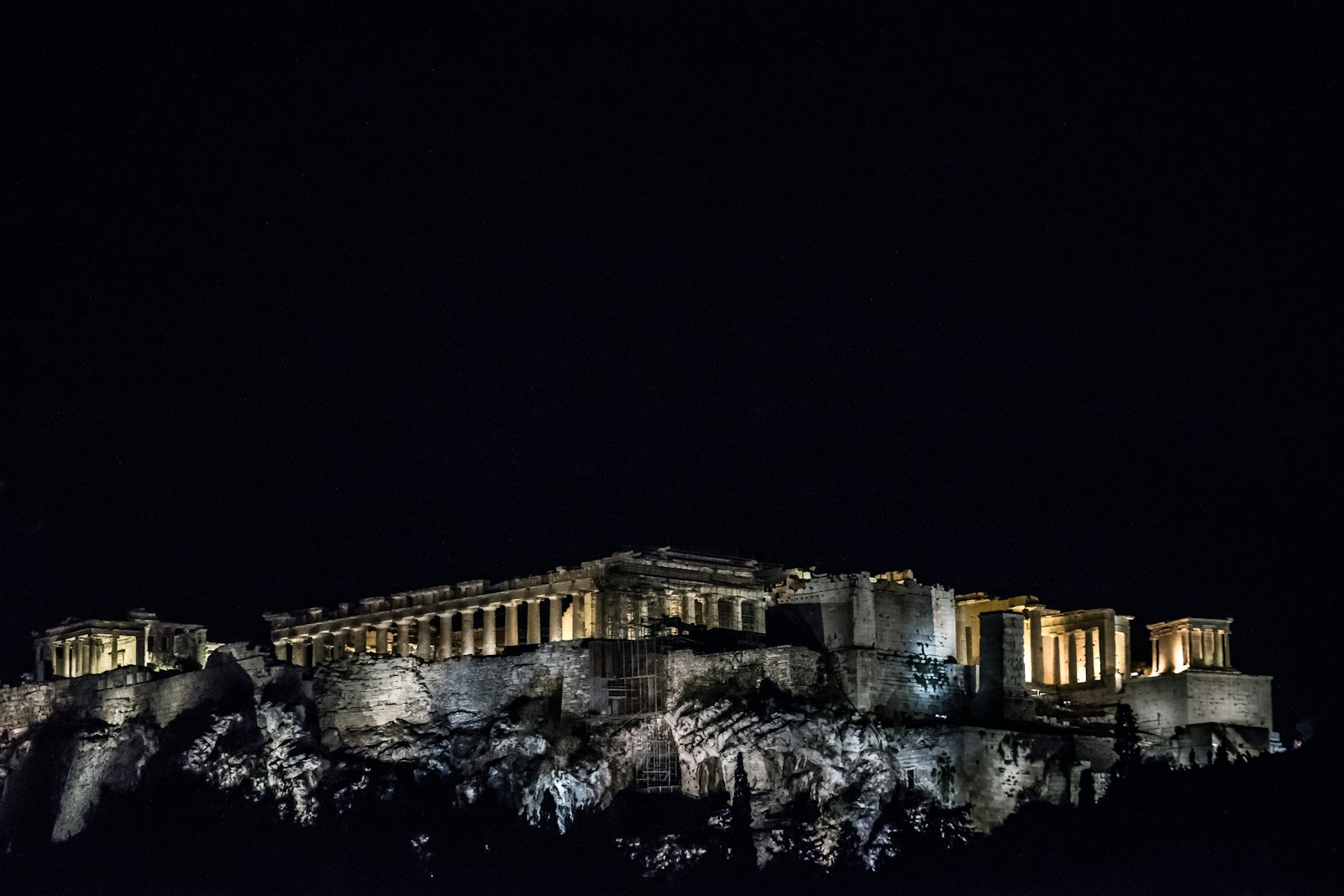
A fragment of writing, a pair of columns, a surviving building: each can invite the feeling that a larger world is waiting behind it. Thuban makes room for that feeling. The next step is to turn it into questions that can be followed.
Who made the object? Where was it found? What can be dated, and what remains uncertain? Which interpretations come from the culture that produced it, and which were added by later readers? These questions make a symbol’s history more layered. They also protect us from imagining that every resemblance proves a direct connection.
An old motif can acquire new meanings without preserving a single secret message unchanged. A modern viewer may find personal meaning in it, too. That is an interpretation worth naming as such. It does not need to impersonate an archaeological conclusion.
Question for the reader: When an ancient image moves you, can you describe both what is historically supported and what you personally bring to it?
Continue exploring: How scripts become readable · Stories, sources and meaning.
Thuban editorial reflection · 10 October 2026 · Not breaking news
THE LONG VIEW / PHILOSOPHY OF LIFE
What deserves your attention after the headlines?
A substantial briefing should leave us with more than a queue of things to worry about. Once the reading is finished, a quieter question remains: what deserves a place in the day we actually have?
Try separating three kinds of attention. There is what you need to understand, even when you cannot directly change it. There is what you can influence through a particular conversation, commitment or action. And there is what you repeatedly consume without becoming better informed or more able to act. The boundaries will differ from person to person.
This is an invitation to examine a habit, rather than a formula for a good life. Staying informed and preserving time for friendship, study, making things and being outdoors need not become competing identities. The question is which balance you can honestly stand behind.
A short reflection: Write one thing you learned, one question you still have, and one action that is within reach. Leave room for an unanswered question. Not every valuable thought needs to become an immediate conclusion.
Continue exploring: Epicurus and enough · The Daodejing and non-forcing.
Thuban editorial reflection · 10 October 2026 · Not breaking news
How to read the Daily
We summarize reporting in our own words, identify the original source, and separate verified events from commentary, claims and forecasts. An edition is a dated snapshot, not a continuously updated live feed. For breaking news, consult the linked publisher for later corrections or updates.
We welcome uncertainty when facts remain incomplete. Being skeptical of a headline is not the same as assuming its opposite is true.